
Pricing Psychology for SaaS Founders: How to Charge More Without Losing Customers
Most SaaS founders price on cost and gut feel. The ones who grow sustainably price on value perception. Here is how psychological pricing principles translate into real revenue gains for small products.
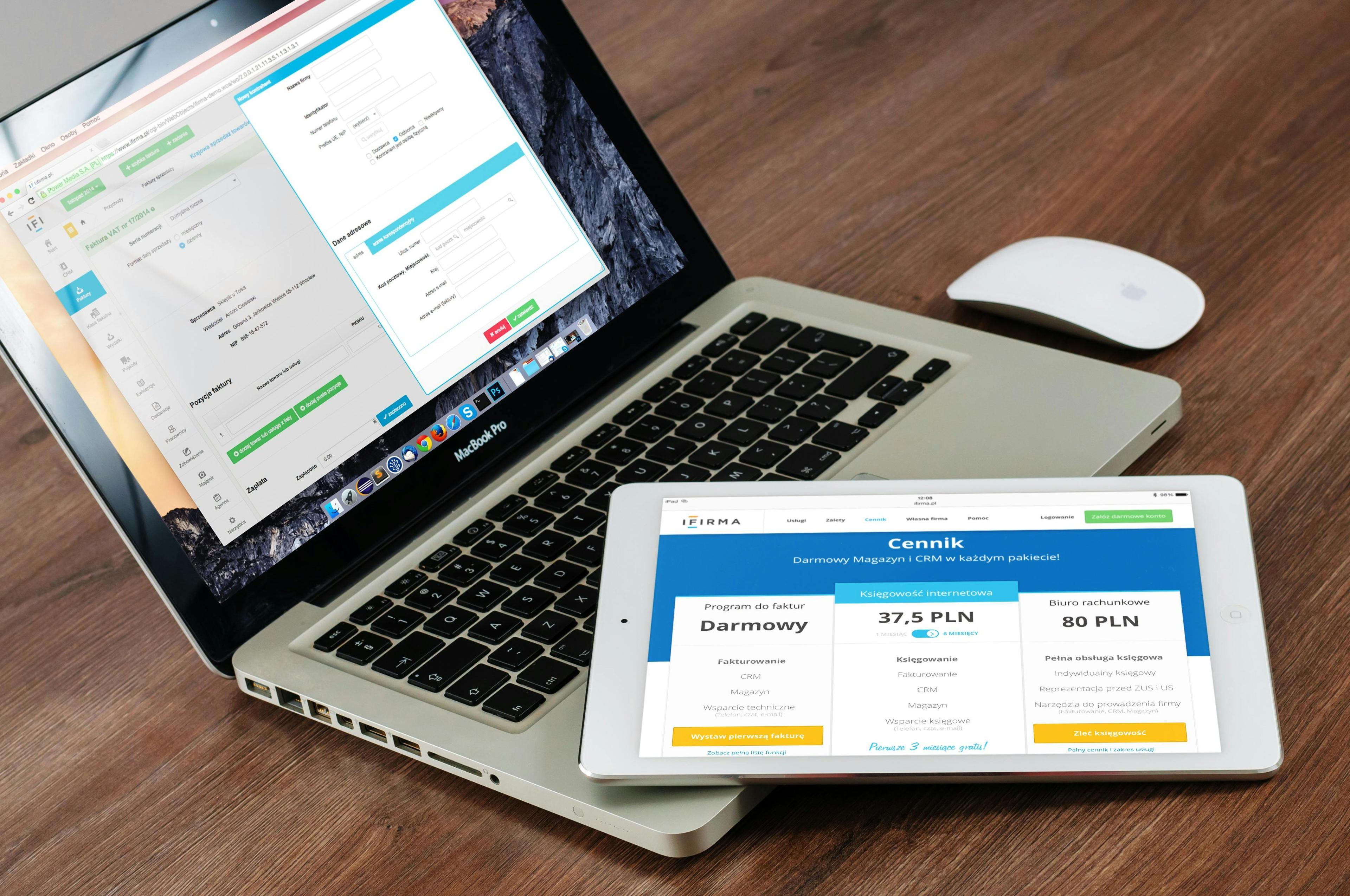
Pricing is the fastest lever a SaaS founder can pull. A ten-percent improvement in conversion rate takes months of product and marketing work. A ten-percent increase in price takes an afternoon and improves revenue on every sale from that point forward. Yet most founders revisit their pricing once at launch and then treat it as a settled question.
The reluctance is understandable. Pricing feels risky in a way that other changes do not. The fear is that any upward movement will cause customers to leave, conversions to drop, and the business to contract. In practice, for most small SaaS products, this fear is significantly overstated — and the failure to price appropriately is quietly one of the most expensive mistakes a founder makes.
How Customers Actually Decide on Value
Customers do not evaluate price in isolation. They evaluate it in context — against their alternatives, against the outcome your product produces, and against the signals your pricing design sends about the type of product and customer you serve.
This is the first principle of pricing psychology: price is a signal. A low price communicates that the product solves a small problem for a customer who is not investing seriously in the category. A premium price communicates that the product delivers meaningful value and that the customers who use it are treating it as a serious tool. Counterintuitively, premium pricing can increase conversion rates in markets where buyers are looking for signals of quality and credibility.
The implication is that your price affects not just your revenue per customer but the type of customer you attract. Cheap pricing attracts customers who are not deeply committed, who churn at high rates, who demand the most support per dollar of revenue, and who generate the most negative reviews when things go wrong. Premium pricing tends to attract the opposite profile.
The Anchor Effect in Pricing Pages
Anchoring is one of the most well-documented phenomena in pricing psychology. When presented with multiple options, people evaluate each option relative to the others rather than in absolute terms. The presence of a high-price option makes mid-range options feel reasonable, even if the mid-range price would feel expensive presented on its own.
Most SaaS pricing pages use three tiers for exactly this reason. The highest tier is not primarily a revenue driver — it is an anchor that shifts how the middle tier is perceived. A $99/month plan feels expensive next to a $19/month plan. The same $99/month plan feels like obvious value next to a $249/month plan.
Designing your pricing page with anchoring in mind means thinking carefully about which tier you want most customers to choose, and then engineering the page so that tier feels like the smart, reasonable decision in context. The top tier should exist and be priced significantly higher. The bottom tier should be limited enough that the middle tier is clearly the better value. The middle tier is the product you are actually selling.
Feature Gating vs. Usage Limits
There are two primary mechanisms for differentiating pricing tiers: feature gating (different features at different price points) and usage limits (the same features with different quantity ceilings). Both work, but they have different psychological effects.
Feature gating works well when higher-tier features are clearly desirable and the lower tier is genuinely useful on its own. The risk is creating a version of the product at lower tiers that is too limited to be valuable, which increases churn from customers who downgrade or join the lower tier expecting more.
Usage limits work well when the value of the product is clearly proportional to usage. A product that saves time or automates tasks is more valuable to a business doing more volume, and a per-seat or per-unit pricing model can capture that proportional value naturally.
The most common mistake is gating features that users need to get basic value from the product. This creates an activation problem — users cannot experience the core benefit without upgrading — and damages trust. Whatever features are necessary for the activation moment should be available on every tier.
The Upgrade Moment
In a well-designed SaaS product, upgrades happen at natural moments of expanded usage or growing need — not primarily from marketing campaigns. The upgrade moment is the point where a user's current tier genuinely becomes a constraint on what they want to do.
Designing for natural upgrade moments means ensuring that the constraint is clear, visible, and encountered by users who are already experiencing value from the product. A usage limit that triggers before the user has experienced the core benefit is a conversion barrier. A usage limit that triggers when a user who has been active for thirty days wants to do more is an upgrade opportunity.
Present upgrade prompts in context, at the moment of constraint, with a clear explanation of what they unlock. An upgrade prompt that appears when a user hits a limit should immediately show the plan options that remove that specific limit, with language that connects the upgrade to the continuation of what the user was already trying to do.
Annual Pricing as a Revenue Multiplier
Annual pricing — offering a discount in exchange for upfront payment — is one of the highest-leverage pricing mechanisms available to a SaaS founder. A typical discount of fifteen to twenty-five percent in exchange for annual billing accomplishes three things simultaneously.
First, it dramatically reduces churn. A customer on annual billing is effectively committed for twelve months — which means twelve months of product usage, habit formation, and accumulated value before the next renewal decision. Monthly customers face a monthly renewal decision with a monthly friction point where dissatisfied customers can and do leave.
Second, it improves cash flow. Revenue collected upfront is available immediately for product development, marketing, or operations. For a bootstrapped product, this can be the difference between having to make conservative resource allocation decisions and being able to invest ahead of growth.
Third, it increases average customer lifetime value even accounting for the discount. The lower churn rate on annual plans more than compensates for the reduced per-month revenue in most cases.
Prompt annual billing prominently. Many SaaS products bury the annual option or present it only after the customer has already chosen monthly. Surface the annual option as the default or the recommended choice.
Communicating Value, Not Features
The way you describe your pricing tiers has a significant effect on how customers perceive value. Most SaaS pricing pages list features. The better approach is to describe outcomes.
"Unlimited projects" is a feature. "Handle every client project without hitting limits" is an outcome. "API access" is a feature. "Connect your workflow tools and automate your most repetitive tasks" is an outcome. Customers are not paying for features — they are paying for what features enable them to do. Price pages that speak in outcomes align the product's value description with how customers actually decide to buy.
This is particularly important for higher price tiers. The justification for a higher price is not a longer feature list — it is a larger, more compelling outcome. Describe the enterprise or premium tier in terms of the business results it enables, not the technical capabilities it includes.
Raising Prices on Existing Customers
Price increases for existing customers are one of the most anxiety-inducing decisions in SaaS, and one of the most commonly delayed. The anxiety is usually larger than the actual impact.
When raising prices, give existing customers at least sixty days notice, maintain their current rate for a defined transition period, and frame the increase around the value that has been added to the product since they joined. Customers who have been using a product actively, getting real value from it, and building their workflow around it are far more price-insensitive than a founder's intuition typically suggests.
The customers most likely to leave at a price increase are the ones who were least engaged to begin with. Losing those customers while retaining the engaged core often improves key metrics — lower support costs, higher NPS, better testimonials — even if total customer count declines slightly.
Price is not fixed. It is a variable you can optimize. Most founders leave significant revenue uncaptured because they never revisit it.